01
3D Printing
Rapid prototypes, fit checks, housings, fixtures, jigs, functional parts, and short-run production components.
Atlas turns ideas, sketches, and broken parts into finished components — using 3D printing, CAD, CNC plasma cutting, and short-run manufacturing. Built right. Built to use.
Atlas is built for customers who need more than just a rendering. The goal is to produce parts that fit, function, and move the project forward.
Rapid prototypes, fit checks, housings, fixtures, jigs, functional parts, and short-run production components.
Turn sketches, measurements, and rough ideas into buildable parts with fabrication-minded modeling and refinement.
Custom brackets, plates, gussets, tabs, templates, signage, and repeatable cut parts for fabrication projects.
Custom assemblies, repair-oriented parts, welded components, and one-off solutions that need practical build thinking.
Low-volume production for repeatable parts without the overhead of a full-scale manufacturing commitment.
Send what you have — a sketch, a photo, a sample part, or just a description of the problem. Atlas will recommend the right path: print, cut, fabricate, or design first.
Start a projectNo bloated quoting cycles. No design-by-committee. Send what you have, and Atlas takes it from there.
Start with a sketch, sample part, dimensions, a CAD file, or a simple explanation of the problem you need solved.
Atlas reviews the job, identifies the right path, and recommends printing, cutting, fabrication, design refinement, or a mix of processes.
Parts are modeled, prototyped, cut, printed, or fabricated based on what the project actually needs.
Prototype work can be adjusted and improved before final production, repeat runs, or project handoff.
Atlas Prototype Works was built to help customers move ideas into physical parts with a practical, manufacturing-focused approach. Rather than separating design, prototyping, and fabrication across multiple vendors, Atlas combines them into one streamlined workflow.
The goal is simple: create functional prototypes, custom parts, and short-run production solutions that solve real problems and support actual use.
Function, fit, and manufacturability — not just appearance.
Start from a rough concept, broken part, photo, measurements, or a CAD file.
One workflow for concepts, first articles, revisions, and low-volume runs.
Bridges design and making so projects move faster and stay grounded.
Featured projects and recent work from the Atlas shop floor. More projects added as the portfolio grows.
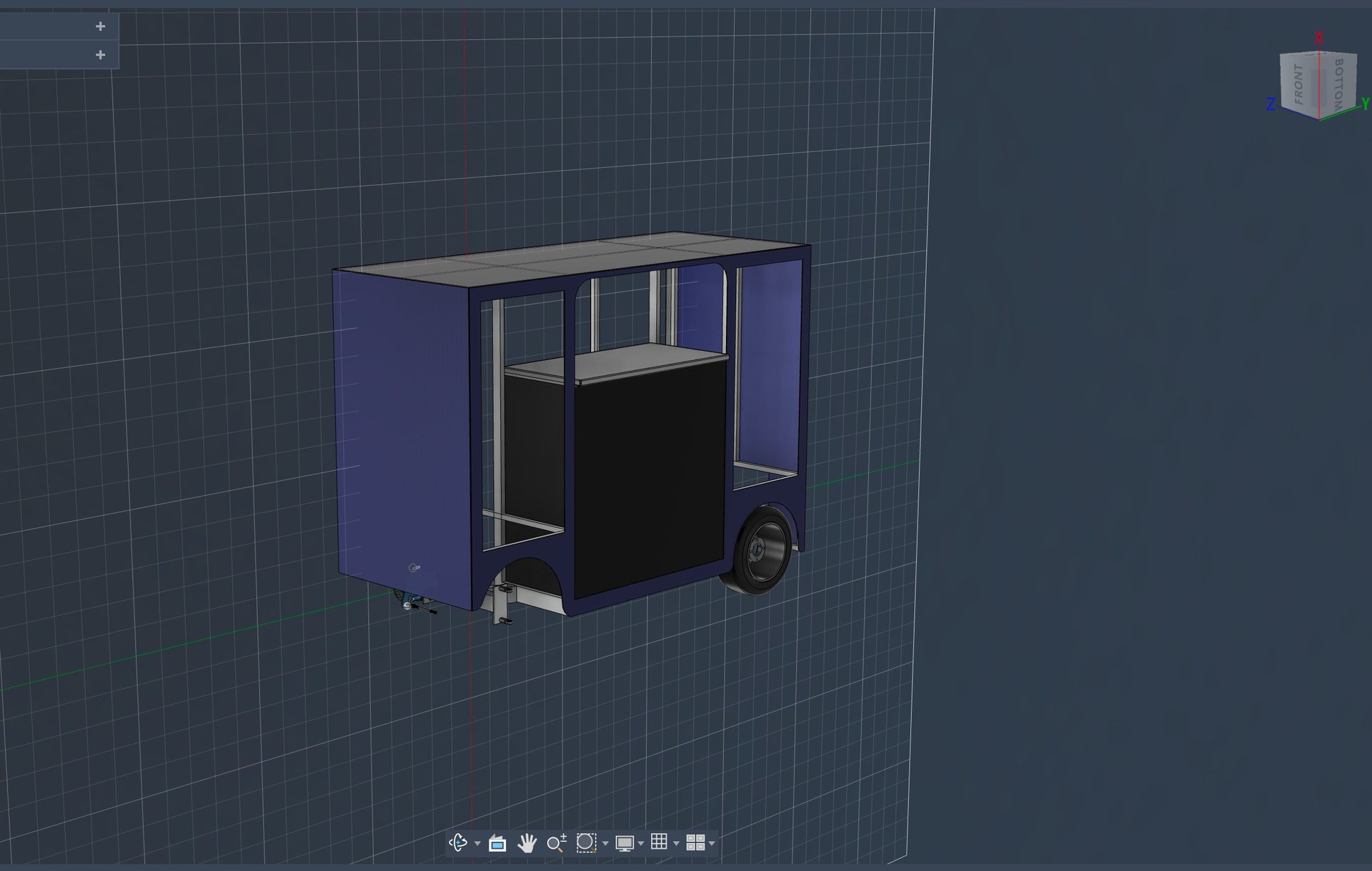
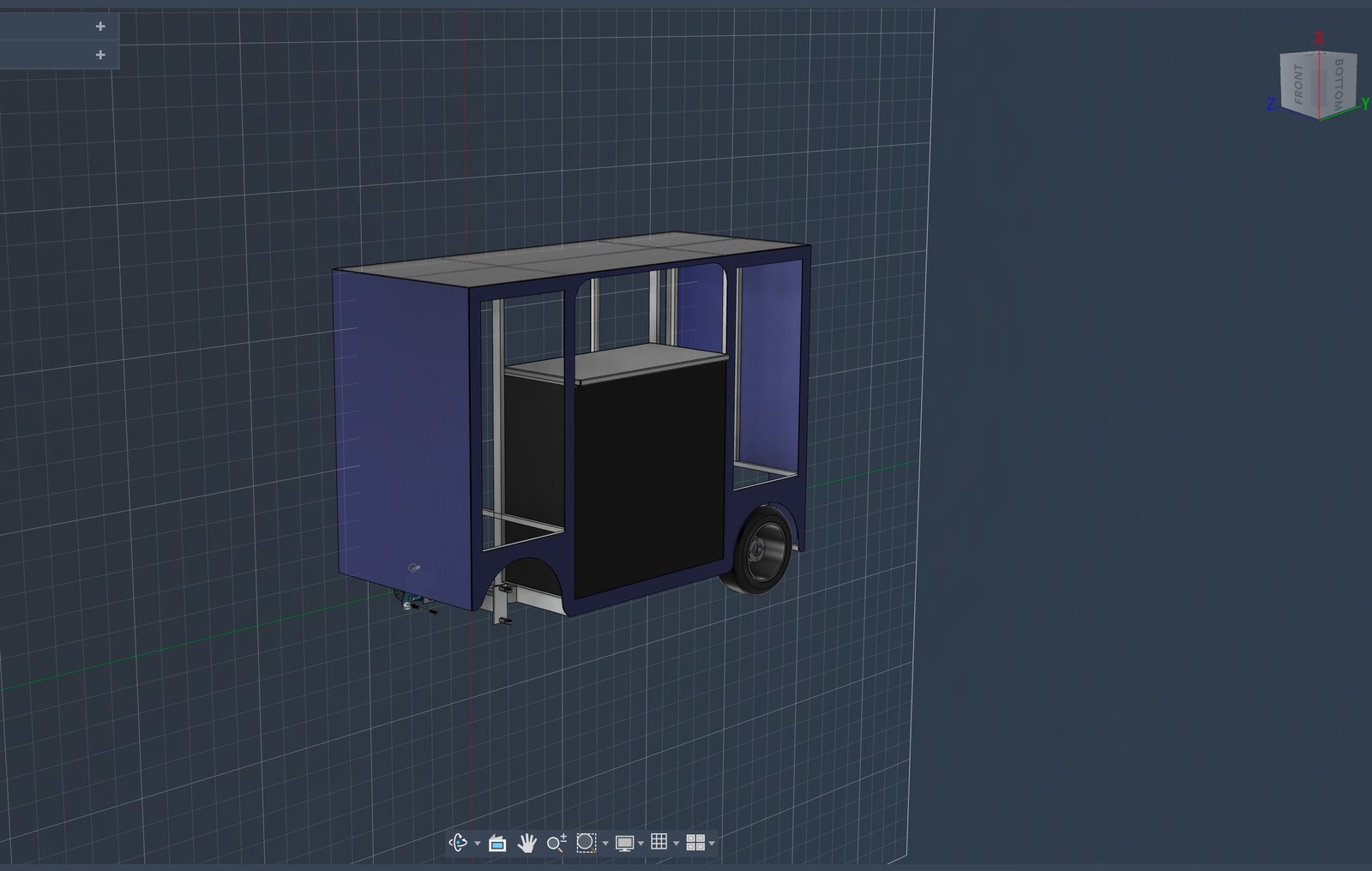
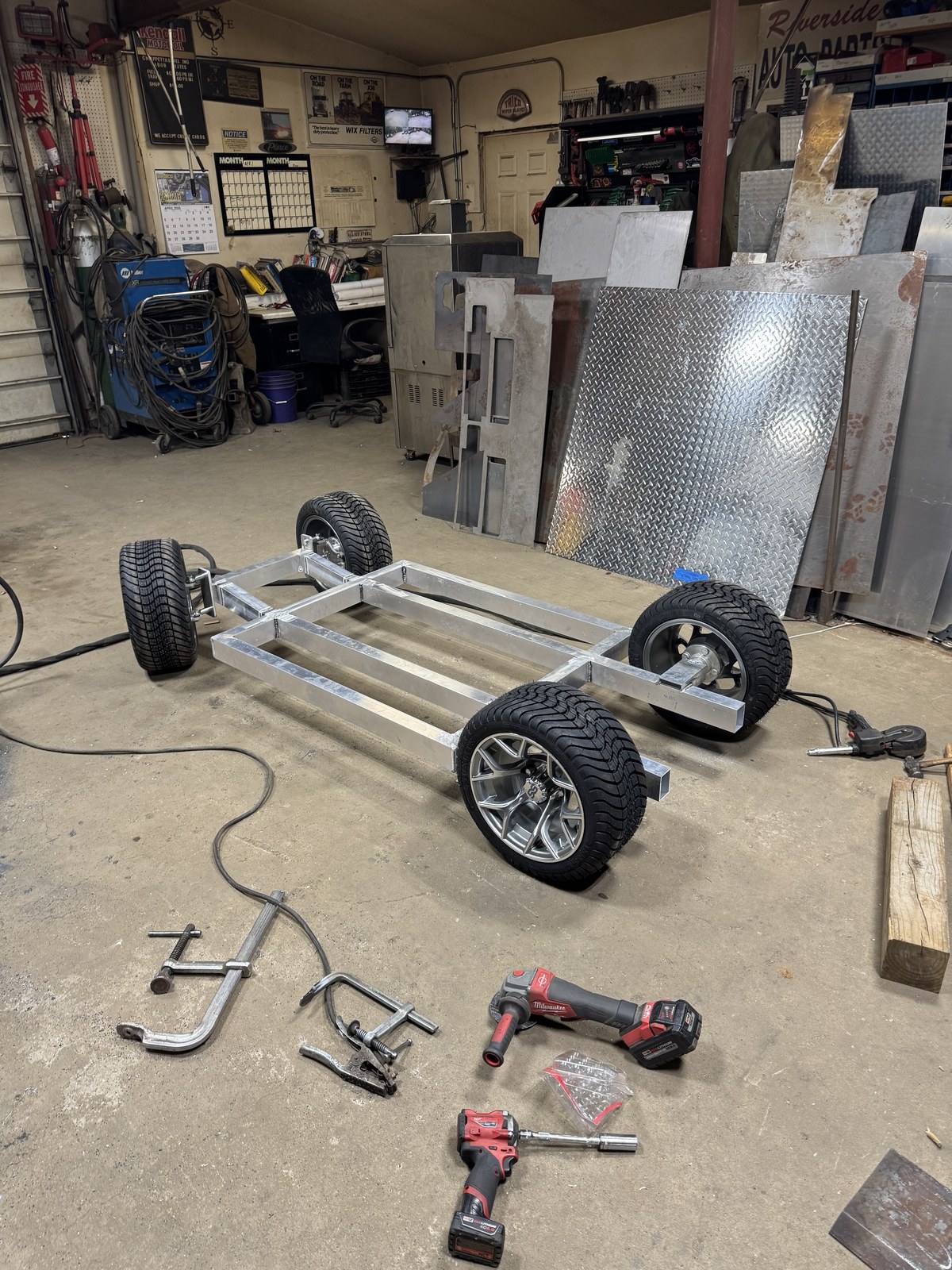
Off-the-shelf carts are either too small, too flimsy, or built around storage that doesn't match how a race team actually works. Atlas Pit Box was designed for our team: aluminum frame for low weight and zero corrosion, integrated tool storage, real brakes and steering, and structural capacity to grow into a powered vehicle later.
// THE APPROACHThe entire vehicle was modeled as a single assembly in Fusion 360 — frame, body panels, suspension corners, brake system, steering linkage, and the integrated Snap-on toolbox. Every component was virtually fit-checked against the others to verify clearances, load paths, and serviceability. Each suspension corner was engineered as a system, with frame gusseting placed exactly where load transfers into the chassis.
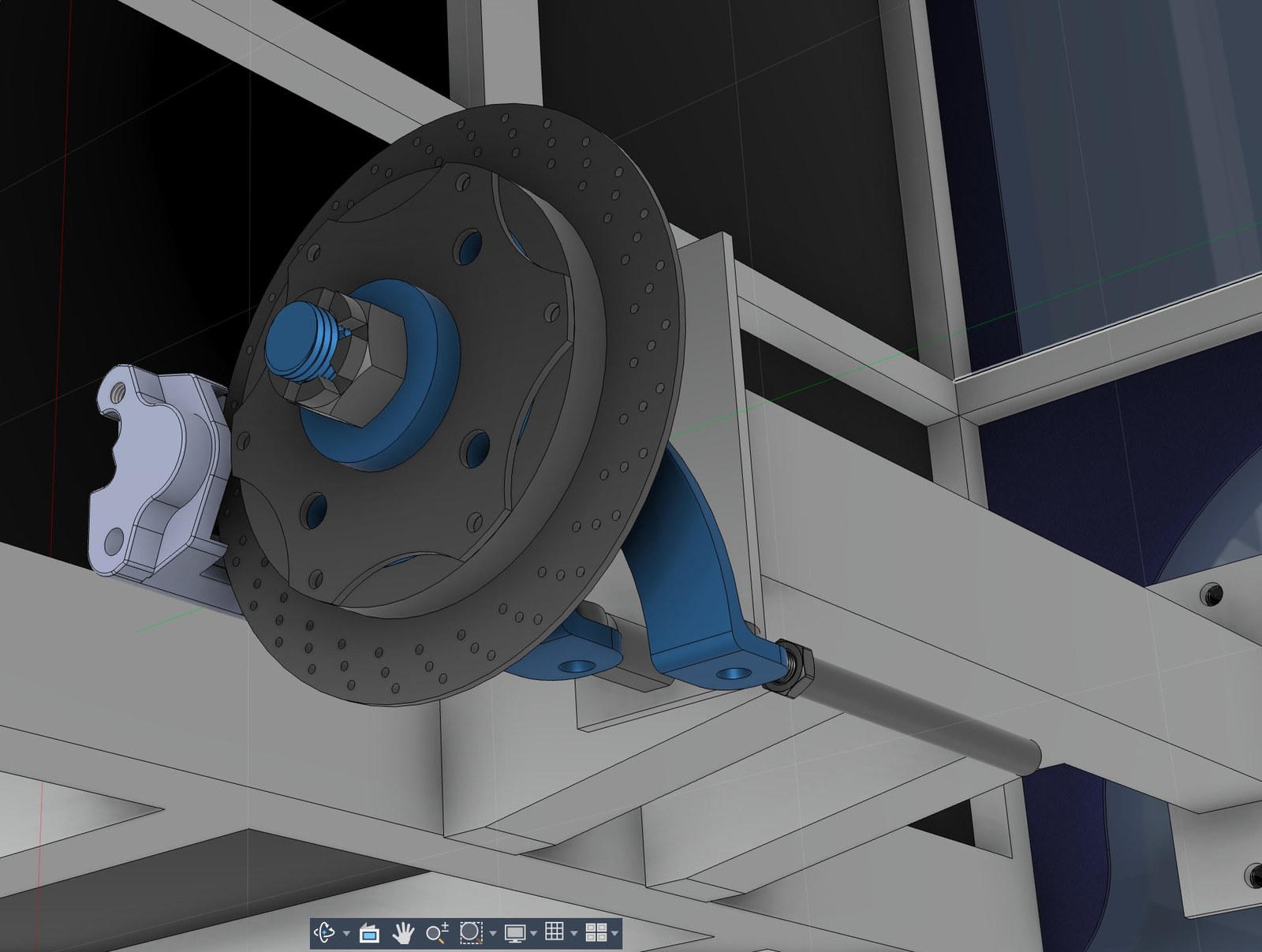
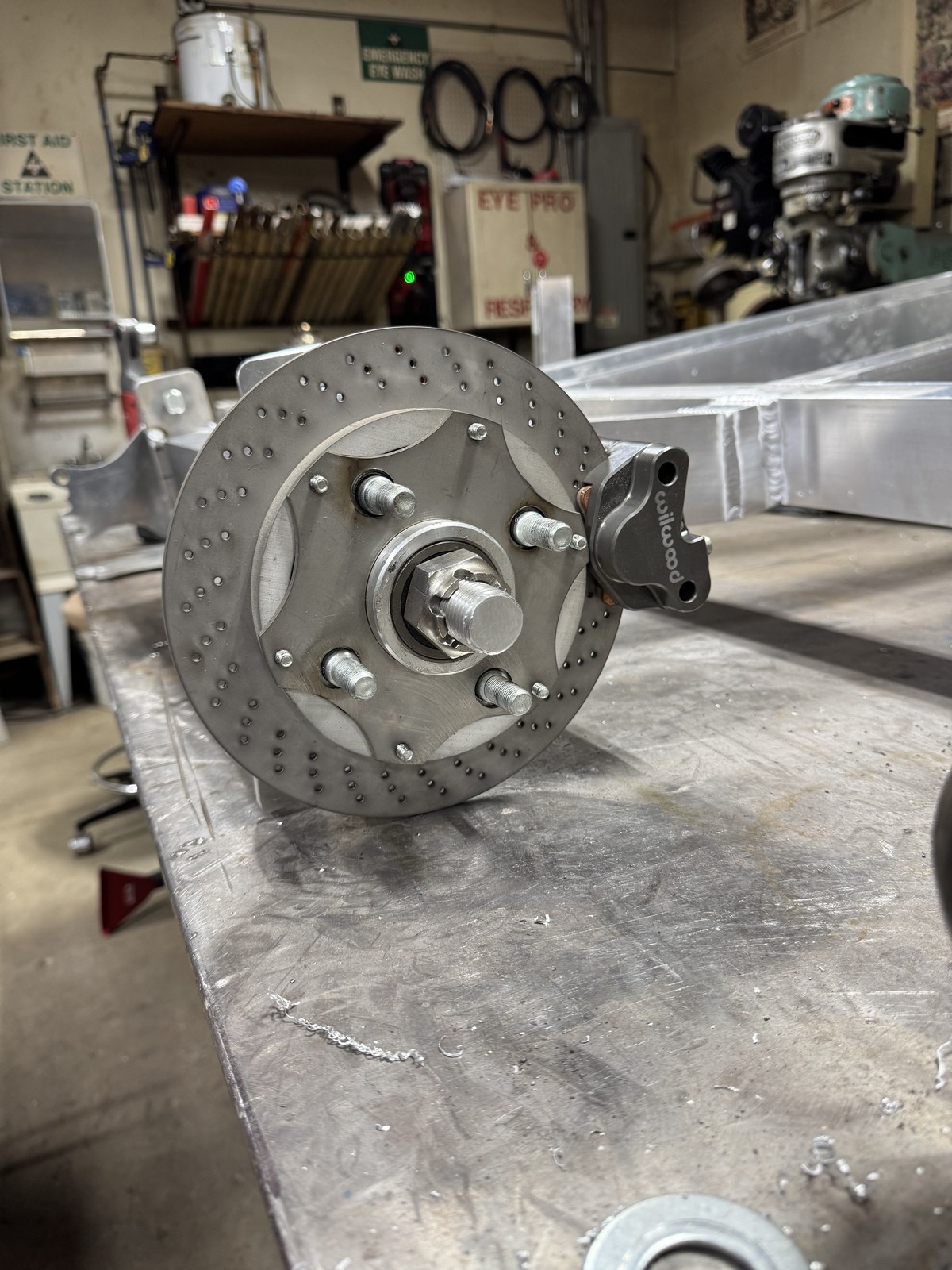
Front brakes use the Wilwood 120-5498 Billet Go-Kart caliper — a 2-piston billet aluminum unit with 1.57 in² of clamping area, weighing just 1.5 lb. Hydraulic actuation comes from a Wilwood 260-4202 motorcycle handlebar master cylinder with a 5/8" bore and integral three-position parking brake lock.
The 5.1:1 hydraulic ratio between caliper and master cylinder falls inside Wilwood's own factory pairing for kart-class brake circuits — proven feel and adequate clamping force for the cart's loaded weight without resorting to a custom one-off pedal box.
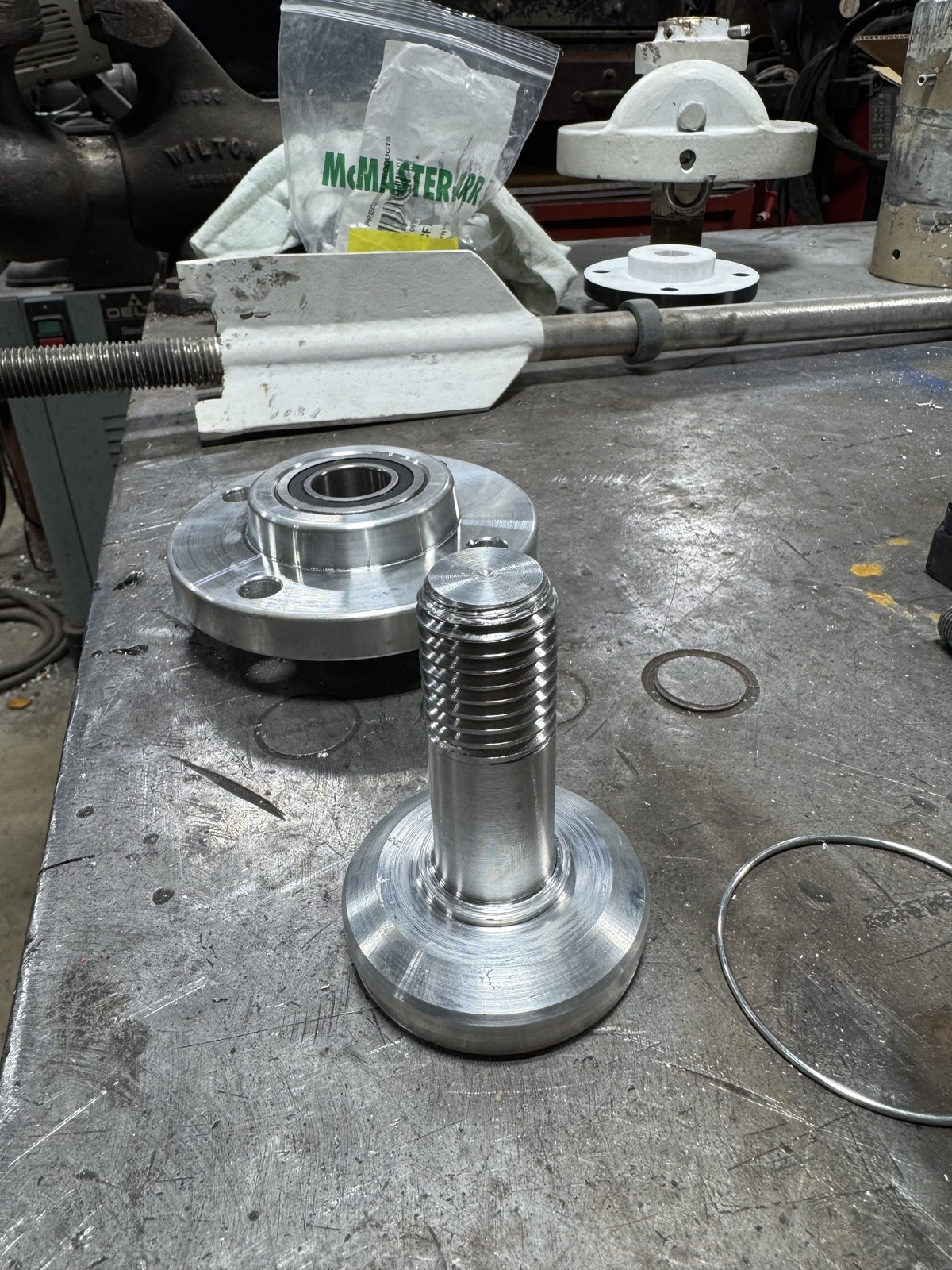
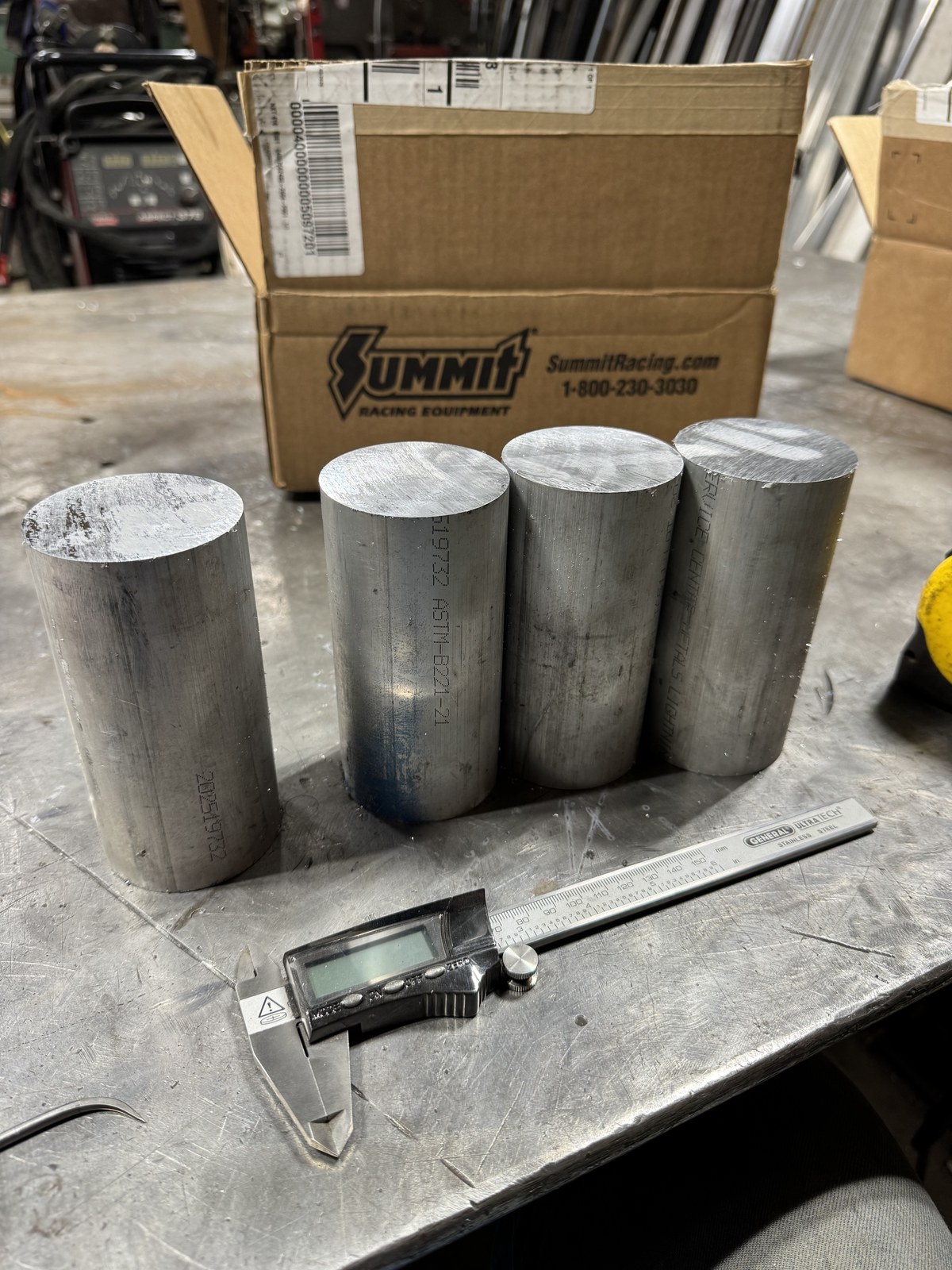
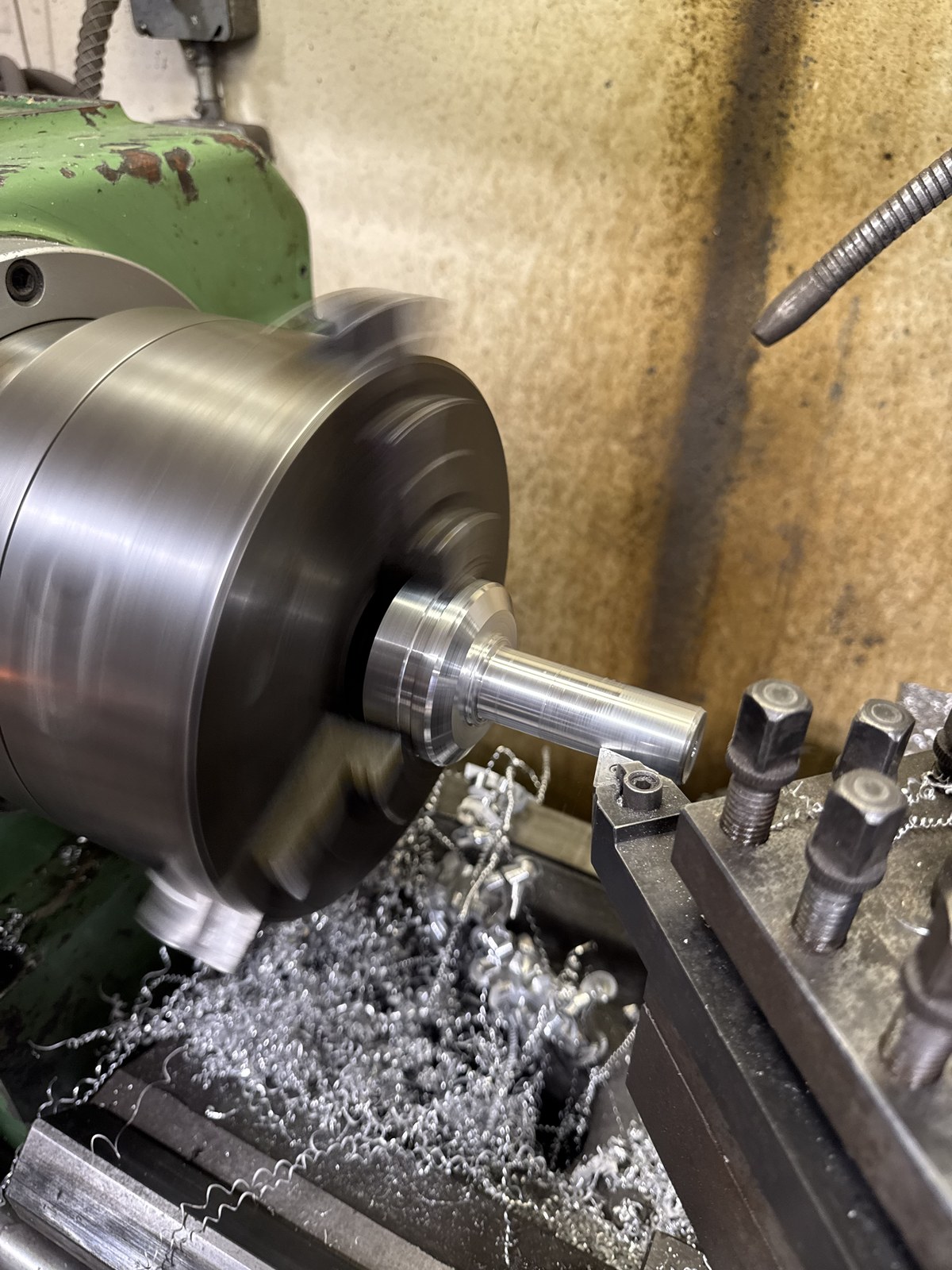
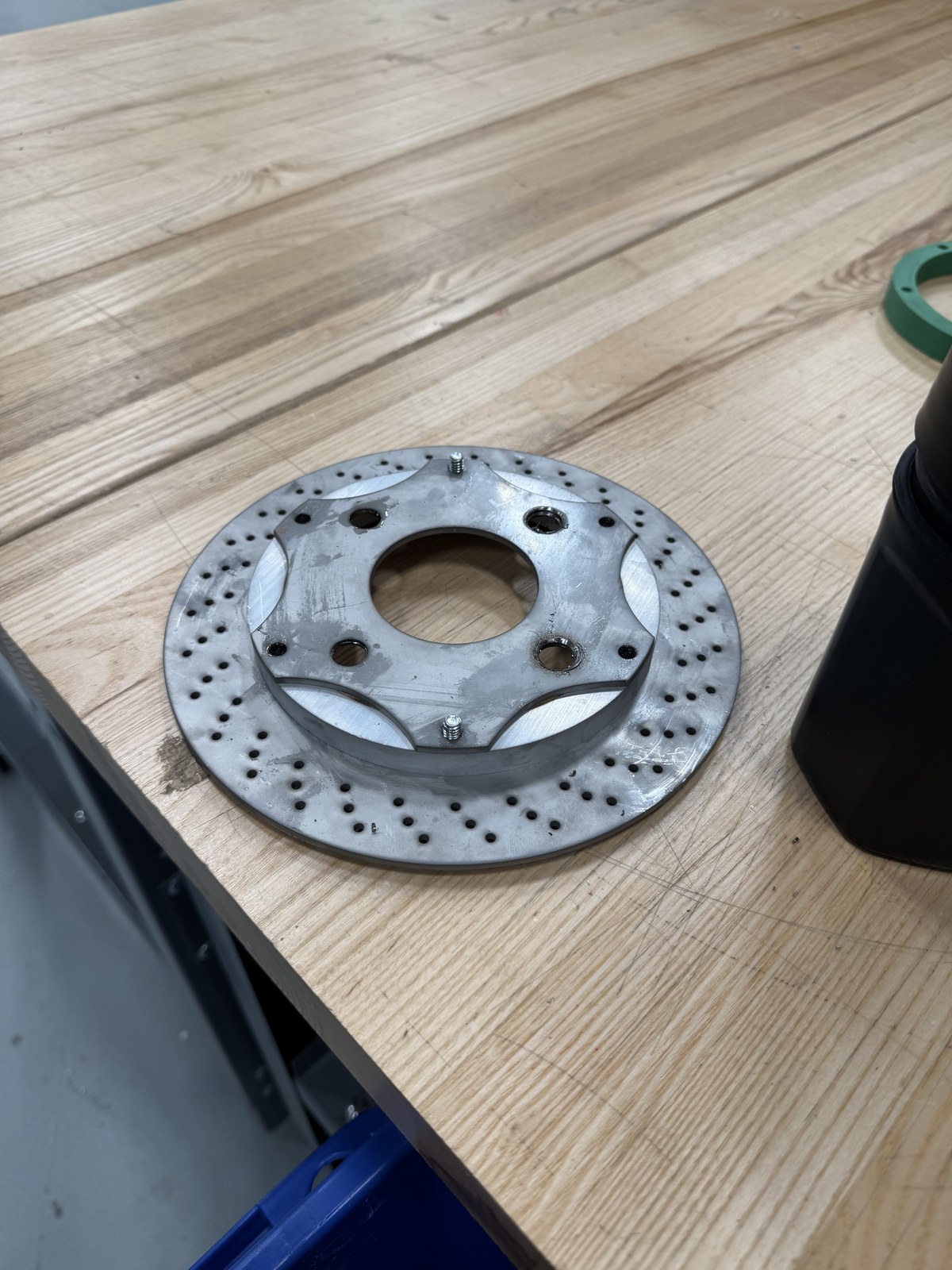
The hub adapter, spindles, and steering knuckles were all machined in-house from 6061 aluminum bar stock. Each part was modeled in Fusion 360, exported to manual lathe and mill operations, and finished to drawing.
The two-piece rotor design separates the swept braking surface from the wheel-mount interface — a drilled 8.75" outer ring sized to caliper spec, mated to a billet hub adapter that handles the wheel stud pattern, bearing seat, and spindle interface. The result is a lighter, more serviceable assembly than a single integrated rotor.
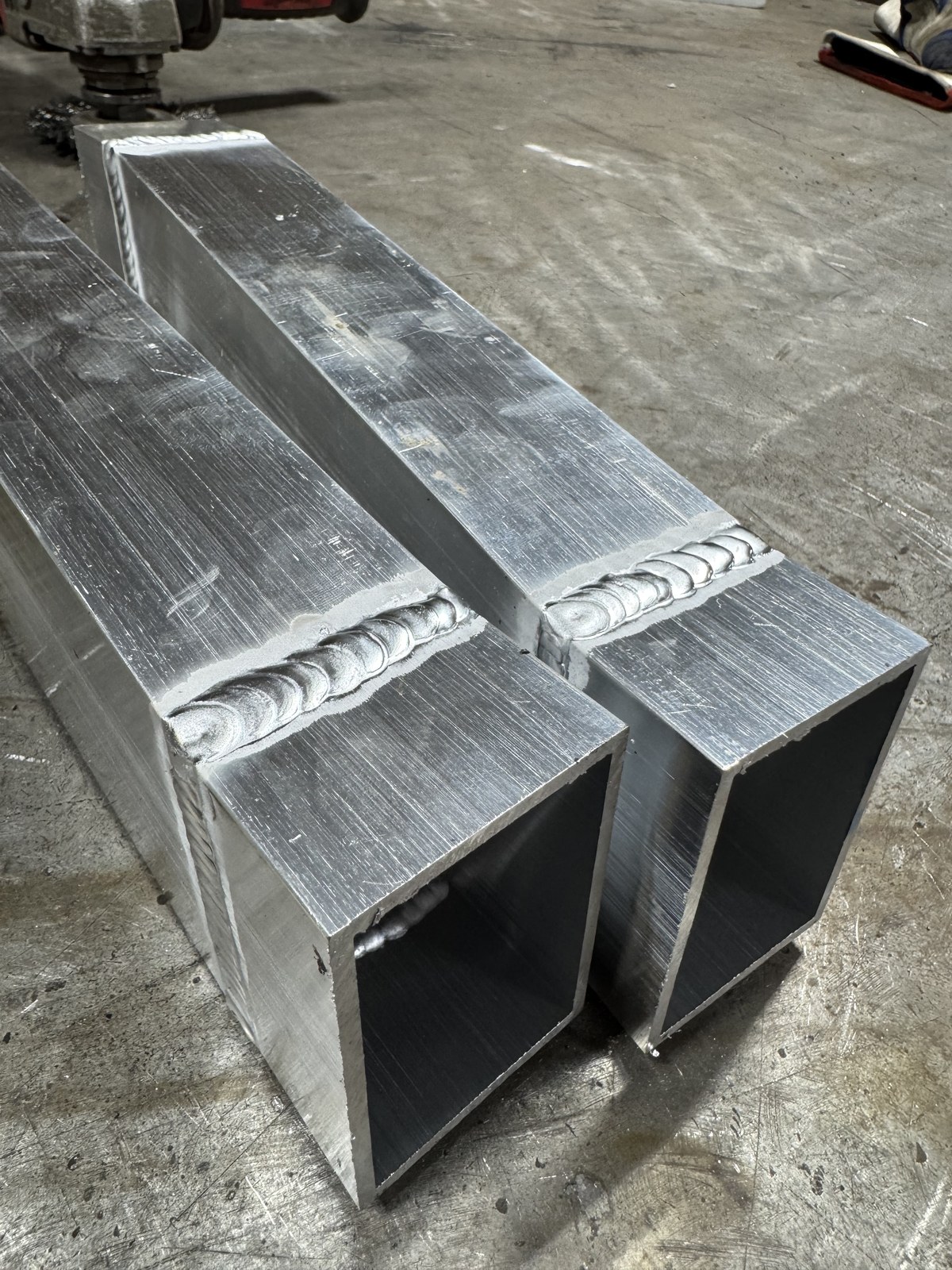
Joints are jigged and tacked before final welds to maintain frame square within tolerance, then reinforced with gussets at every load-bearing intersection — suspension mounts, axle pickups, and the toolbox mounting platform.
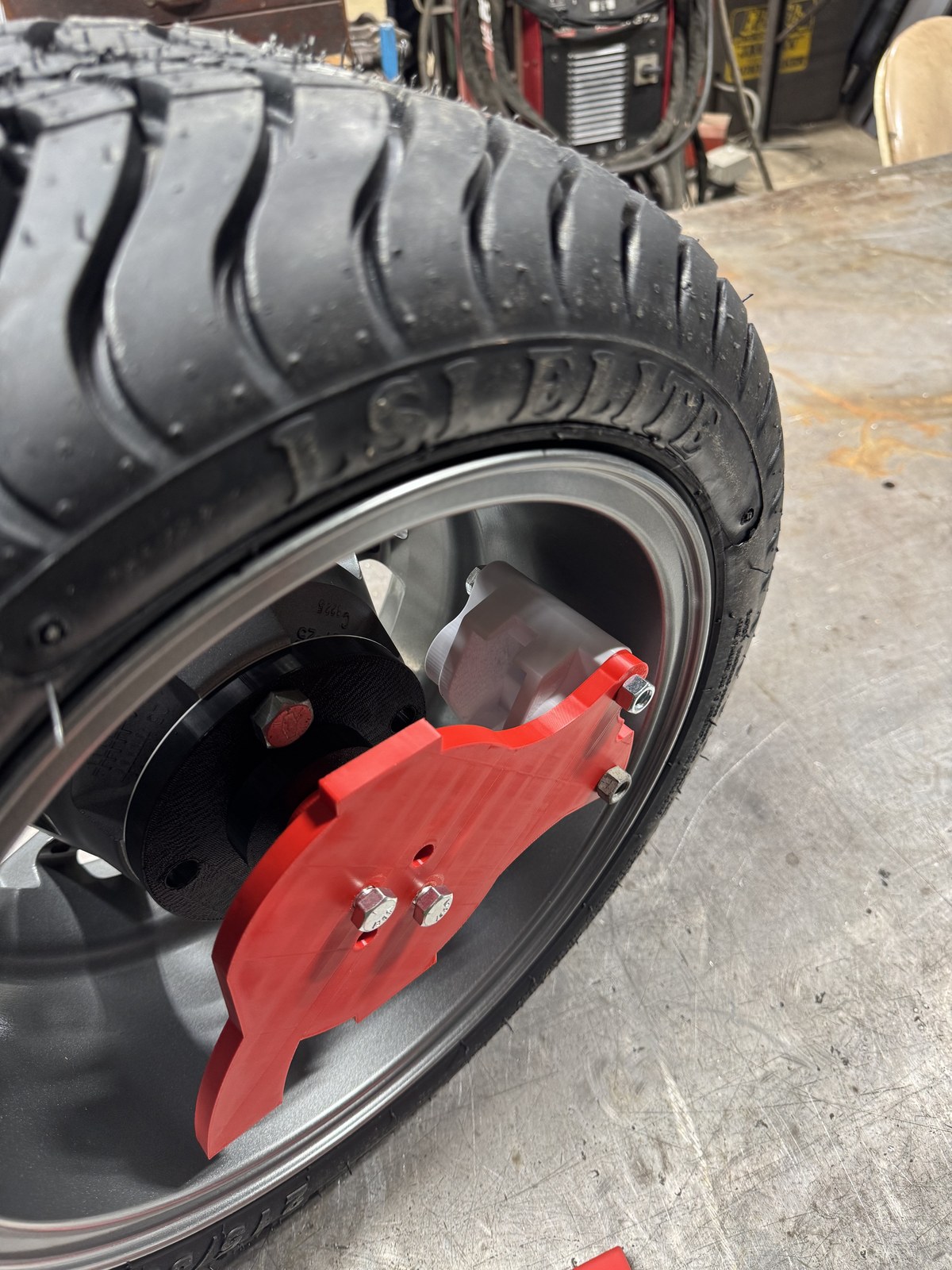
// RAPID PROTOTYPINGCaliper brackets, hub clearances, and assembly fitment are verified on a Bambu Lab H2D dual-toolhead 3D printer with engineering-grade filaments — carbon-fiber-reinforced nylon and high-temperature thermoplastics. This catches interference issues at $5 of filament rather than $100 of billet stock and an afternoon of machine time.
There's an old fabrication triangle: cheap, fast, well-built — pick two. Atlas picks well-built first, then works to be fast. Accuracy beats speed when those two are in conflict — but communication, honest scoping, and quick turnaround keep customer downtime to a minimum. If you need a part designed, prototyped, and built right, the workflow you see in this project is the same one we'll use on yours.
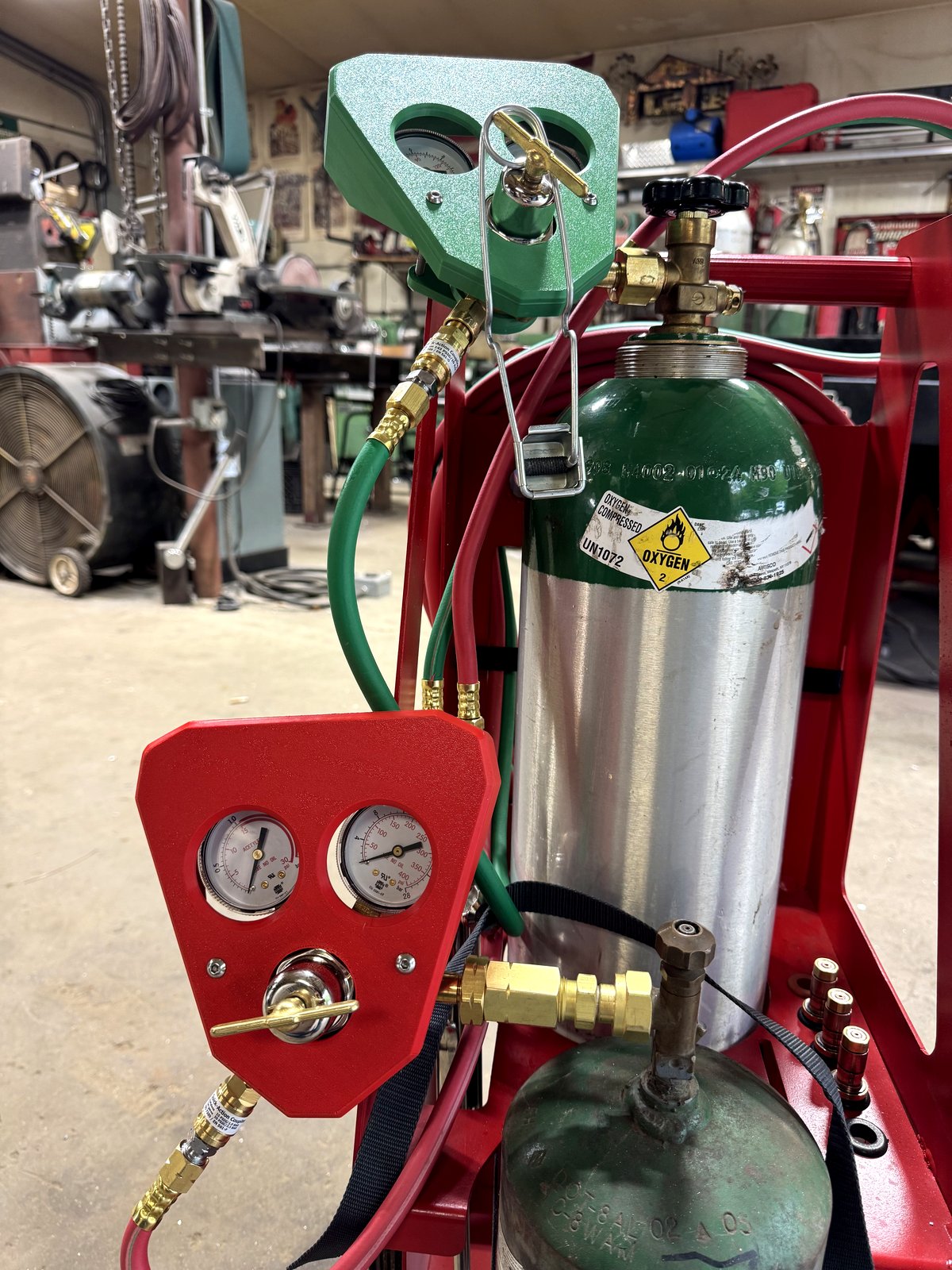
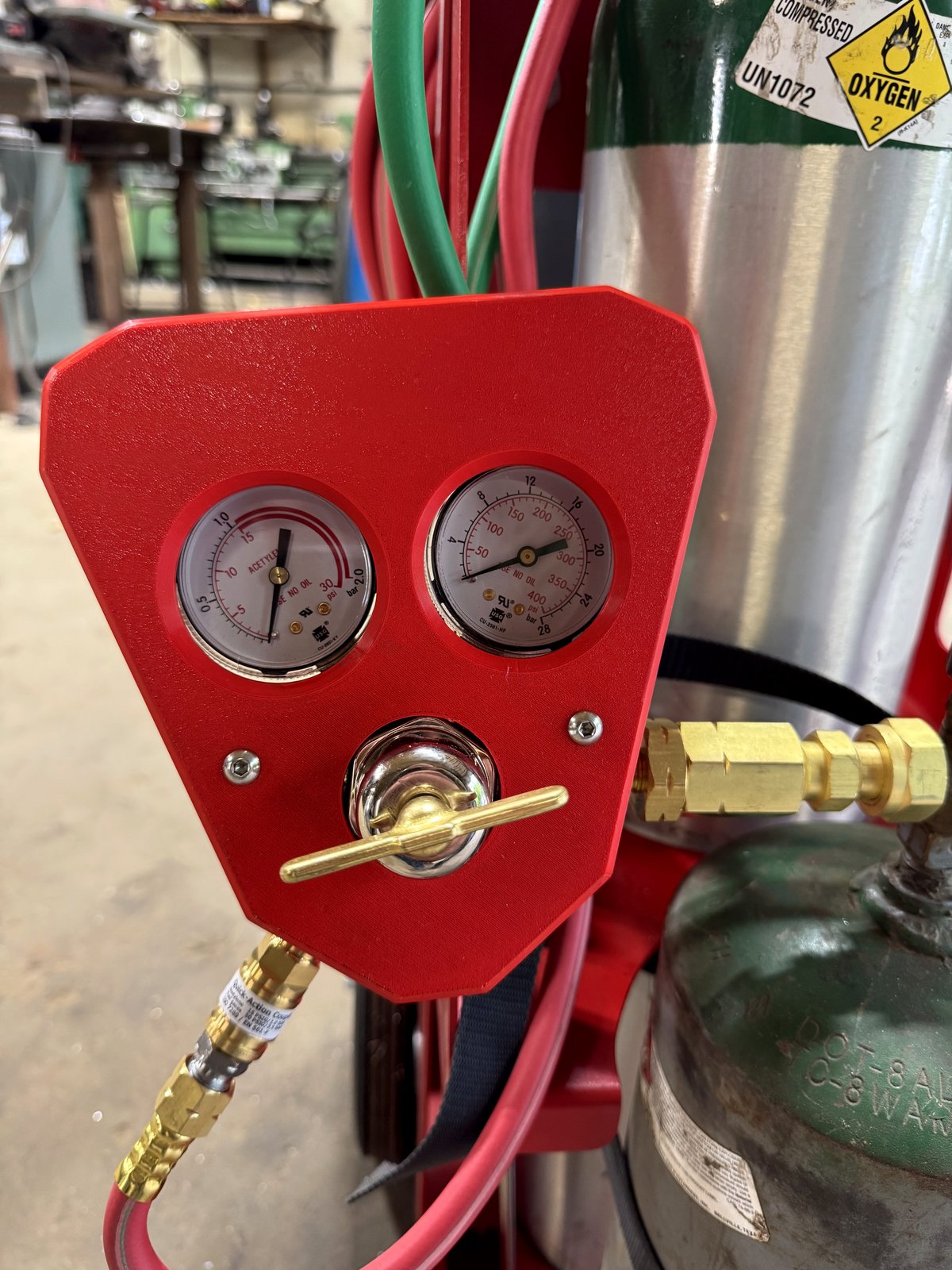
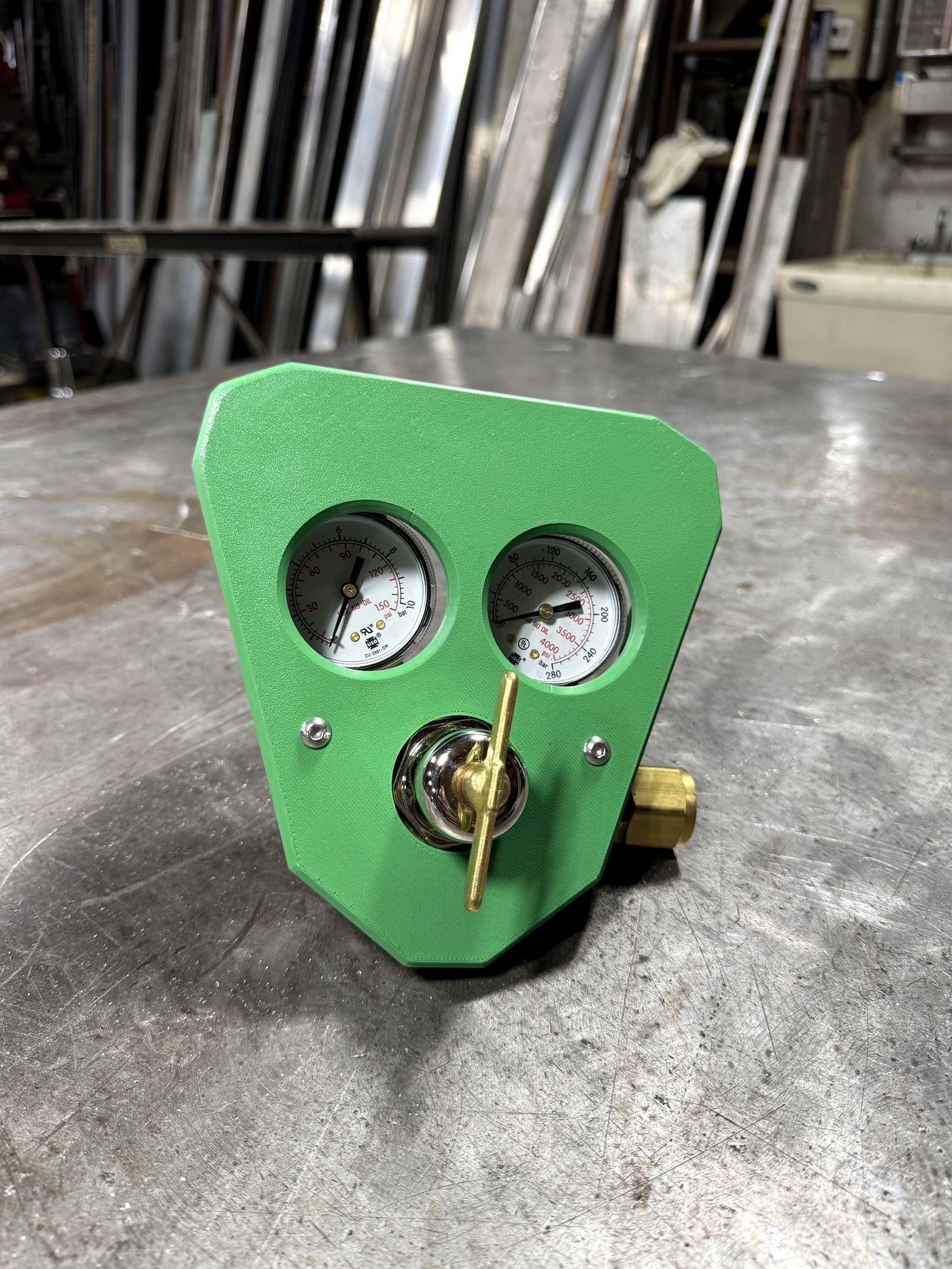
Oxygen and acetylene regulator gauges sit exposed at the top of every torch cart, taking impacts from torch handles, falling hoses, dropped cylinders, and the everyday bumps of moving a cart around a working shop. Replacing damaged gauges is expensive and pulls equipment out of service.
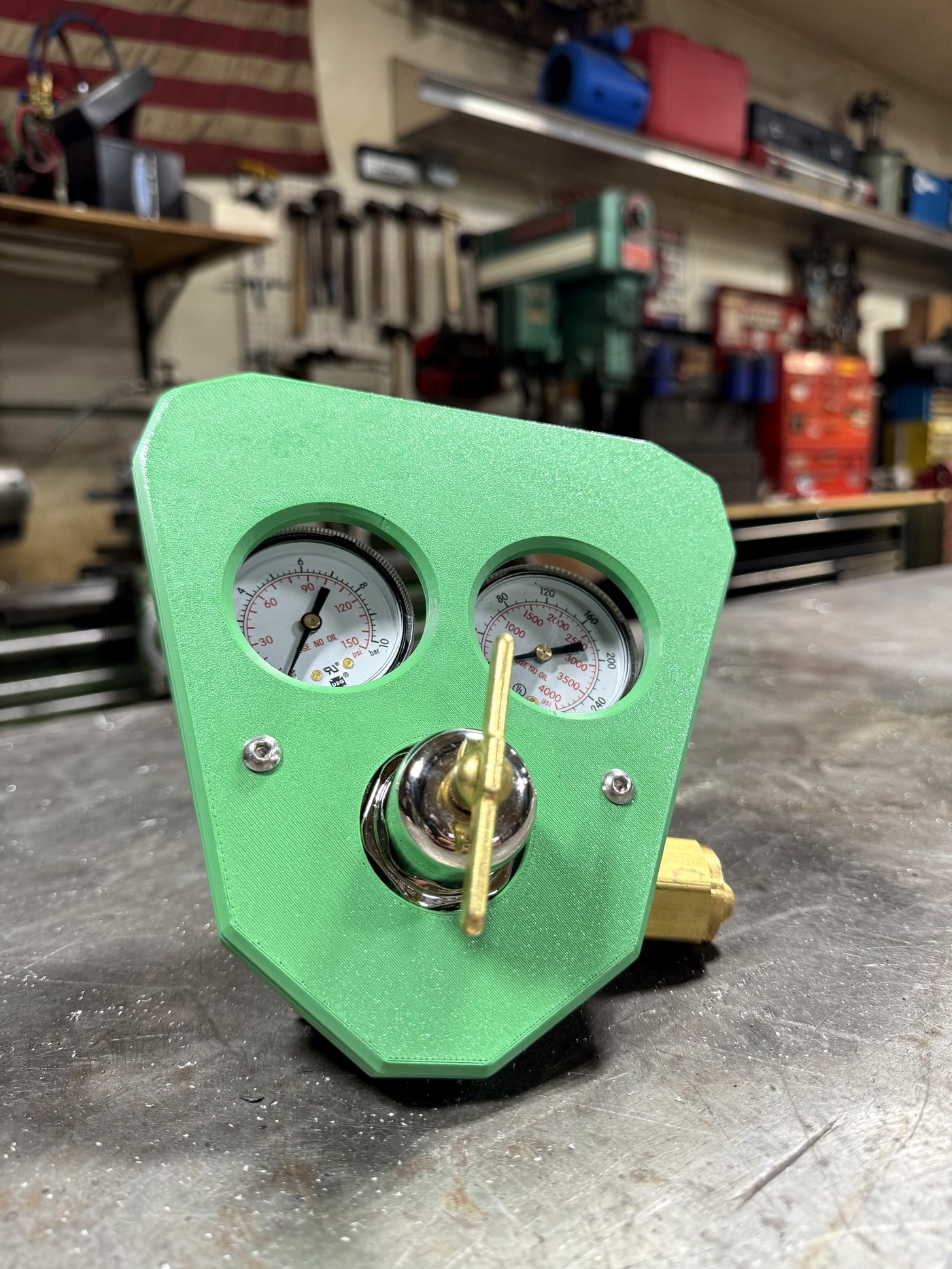
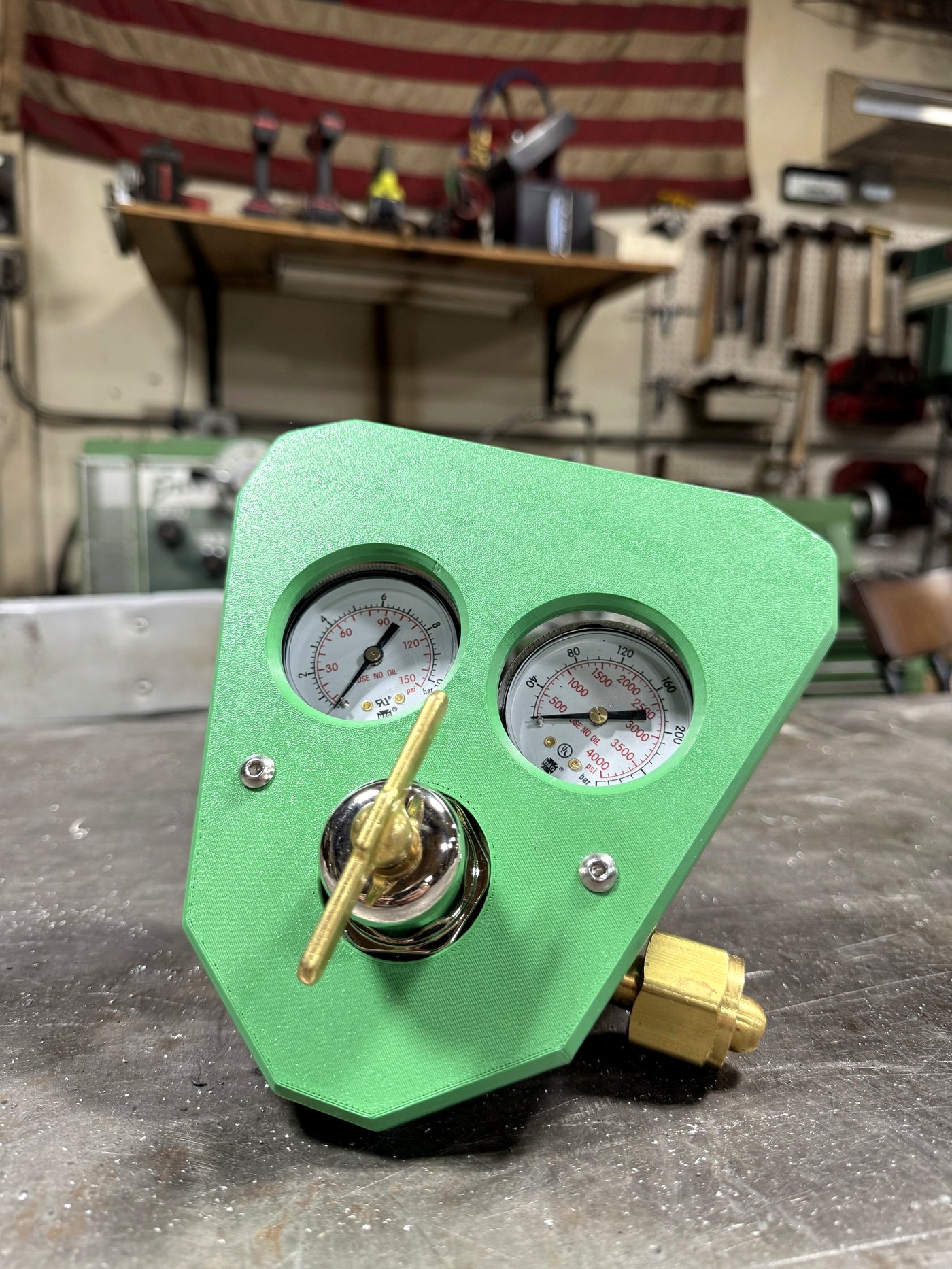
// THE SOLUTIONRegShield SM30 wraps around Smith Series 30 regulators with cutouts for both gauge faces, the regulator T-handle, and the cylinder connection. The protective profile takes impacts on the shield body — not the gauges. Color-coded in green for oxygen and red for acetylene, matching standard welding equipment color codes.
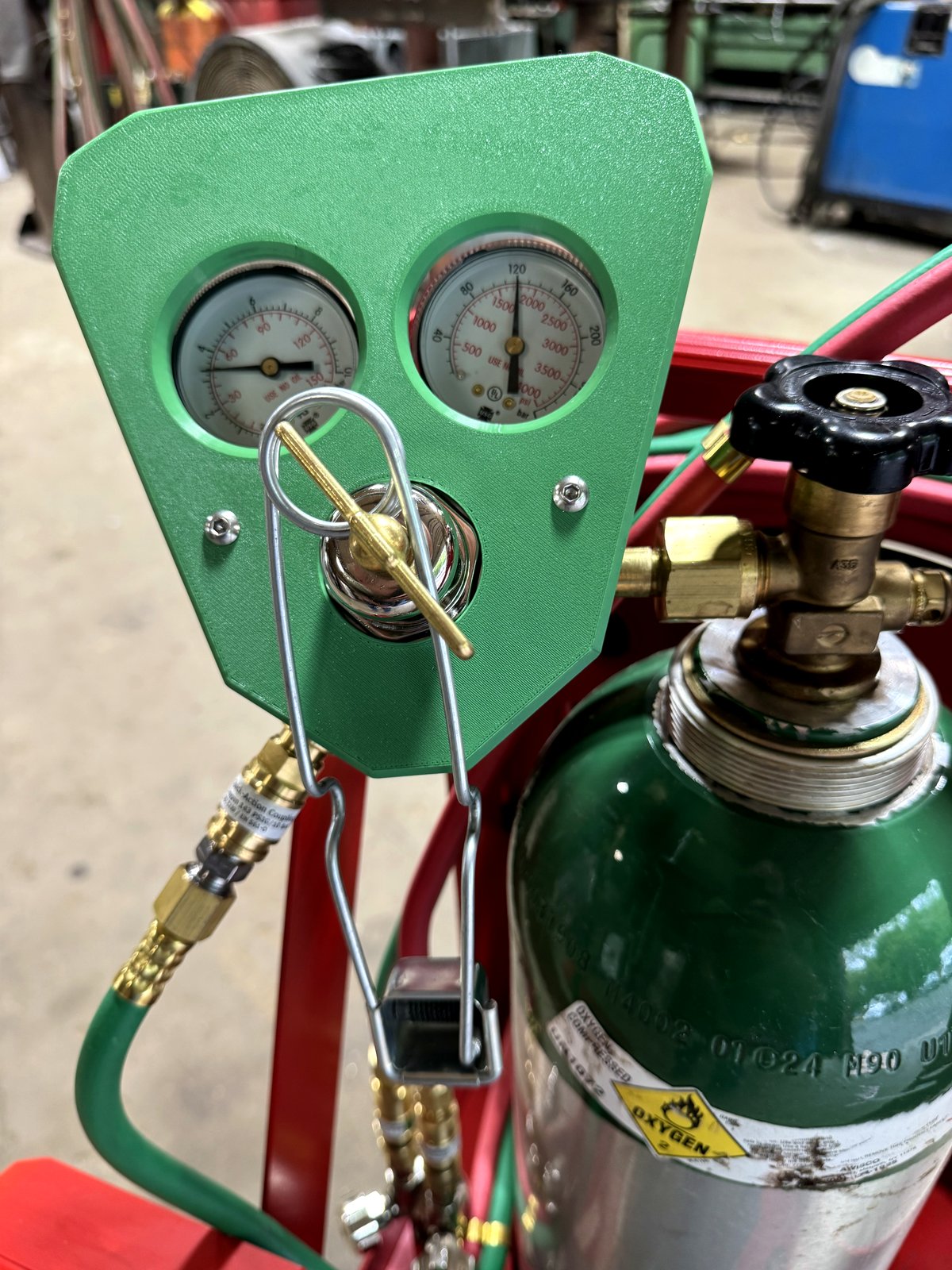
RegShield started as a CAD model, went through multiple printed prototypes for fit refinement on real Smith Series 30 hardware, and became a repeatable short-run production part. The drawing below is from the production design — dimensions redacted, but the engineering discipline behind every Atlas product is visible in the views and structure.
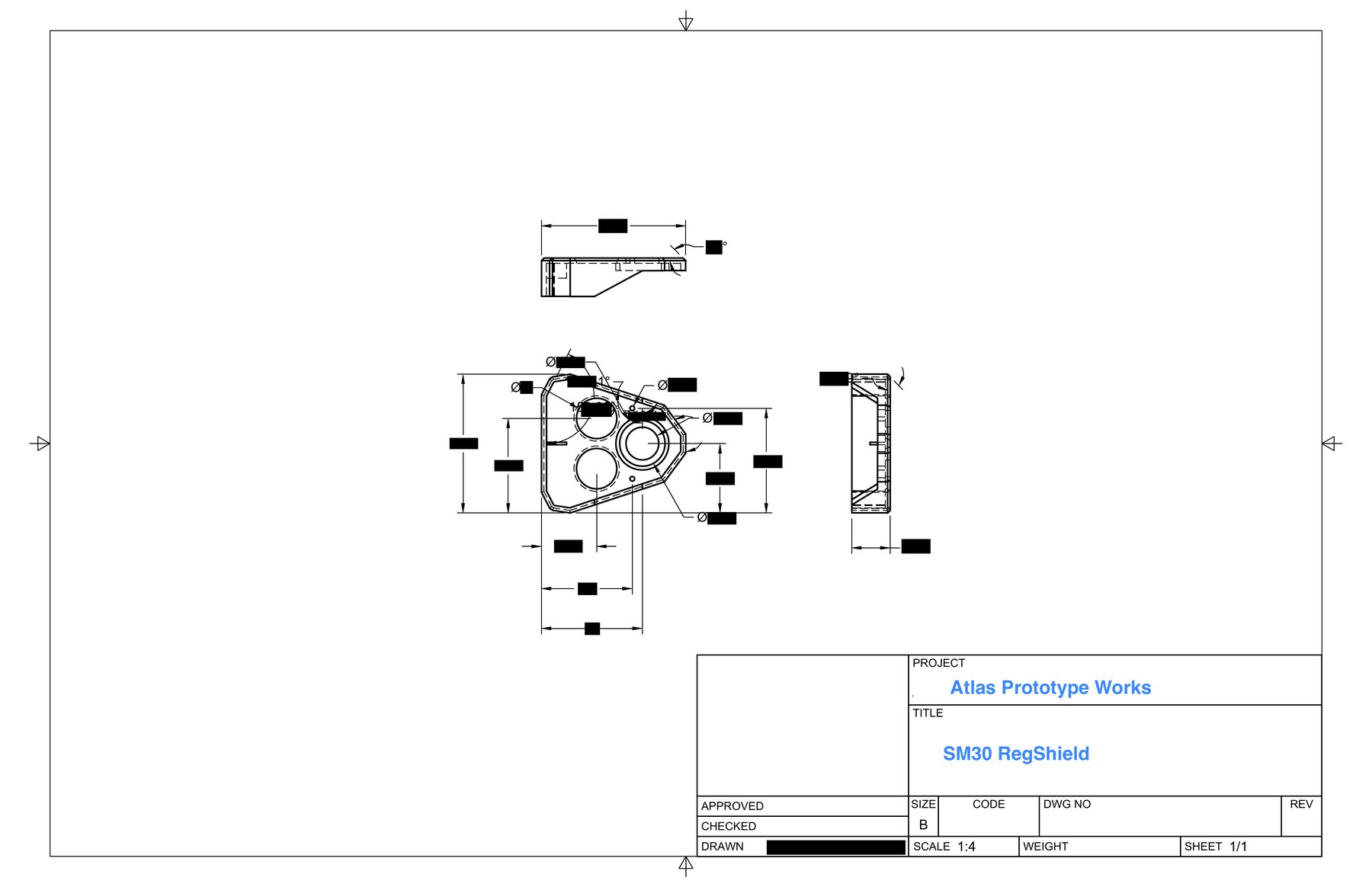 SM30 · DWG REDACTED
Additional regulator models in development. Reach out for pricing, lead time, or to request a fit for another regulator brand.
More project case studies coming as the portfolio expands. Follow @atlas_prototype_works on Instagram for in-progress shots from the shop.
Whatever you have. A sketch on a napkin, a phone photo of a broken part, a few key dimensions, or a finished CAD file — all are workable starting points. The clearer the input, the faster the quote.
STEP, STL, IGES, DXF, DWG, SLDPRT, F3D, and most common CAD exchange formats. PDFs and JPEGs work too if a CAD file isn't available — Atlas can model from drawings or photos.
Quote response within 24 hours. Most small jobs ship in 5–10 business days from approval. Rush work is available when the schedule allows — flag urgency in your request and Atlas will let you know what's possible.
Yes. Local pickup is available in the Riverside, CT area. For everyone else, parts ship USPS, UPS, or FedEx — actual shipping cost is added to the quote.
No minimum. Single-piece prototypes, one-off replacement parts, and small batches are exactly the kind of work Atlas was built for.
For 3D printing: PLA, PETG, ABS, ASA, TPU, and engineering filaments including carbon-fiber-reinforced nylon and high-temp thermoplastics. For CNC plasma: mild steel, aluminum, and stainless in common sheet thicknesses. For machining and welding: 6061 aluminum, mild and stainless steel. Other materials available on request.
For most small jobs, payment is due on completion before shipment. For larger runs or design-heavy projects, a 50% deposit is collected up front with the balance due at delivery. Invoices accept card, ACH, and standard digital payment methods.
Yes. NDAs are welcome for proprietary product work. Send your standard agreement with your project request, or ask and Atlas will provide one.
Whether it's a one-off part, a prototype, a bracket, a replacement component, or a short production run — Atlas can help identify the right path forward.
Helpful to include:
Quote response promise. Atlas replies to every project inquiry within one business day.